reflections of a barely millennial episcopal chaplain...
Showing posts with label ethics. Show all posts

Sunday, August 30, 2015

Who wore it better: circumcision of the heart

I grew up preparing for confession with the traditional St. Augustine's Prayer Book. I cannot think of a more conservative anglo-catholic method of going about the sacrament of reconciliation. What this taught me, very quickly, was that morality was relative. The entire process is one where a sin is presented, over sleeping, but then its opposite, not resting enough, is presented. It is an entire paradigm of damned if you do and damned if you don't. The point is to extract oneself from a list of right and wrong acts and bring one to a space of reflection on ones relationship with oneself, with others, and with God. Where there is dissonance, broken relationships, pain, and barriers to grace is where one recognizes sin... not where one can put a check mark next to a "good" act or an "evil" act.  

Jesus said “Listen to me, all of you, and understand: there is nothing outside a person that by going in can defile, but the things that come out are what defile.” For it is from within, from the human heart, that evil intentions come: fornication, theft, murder, adultery, avarice, wickedness, deceit, licentiousness, envy, slander, pride, folly. All these evil things come from within, and they defile a person.”                                      Mark 7: 15, 21-23

http://www.aafp.org/afp/1998/0915/p891.html
One of the questions that percolates throughout Judaism during the time of Jesus Christ was the question of how were "modern" Jews called to live into the ancient practices of Judaism. This question was pressing while Jesus was alive but became overwhelmingly pressing after the destruction of the Jerusalem Temple in 70 CE. Various Rabbis interpreted the laws and came up with different set of expectations. A properly observant Jew would choose a Rabbinical school to follow and their observance would be measured against their discipleship to that school. Rabbis might disagree on how to interpret a rule, and argue without end, but the importance for the disciple was the living out an observance of their Rabbi's interpretation for the entire law.

Sometimes Jesus is super radical, and sometimes he says something that other Rabbis were saying as well. There is only one self identified Pharisee from this time whose writings remain in existence and this is the former Pharisee, Paul. He did not have access to the Gospel of Mark, or the other later Gospels, yet we find in the writings of Paul, specifically the second chapter of Romans, a very similar maxim: "
For a person is not a Jew who is one outwardly, nor is true circumcision something external and physical. Rather, a person is a Jew who is one inwardly, and real circumcision is a matter of the heart—it is spiritual and not literal. Such a person receives praise not from others but from God."
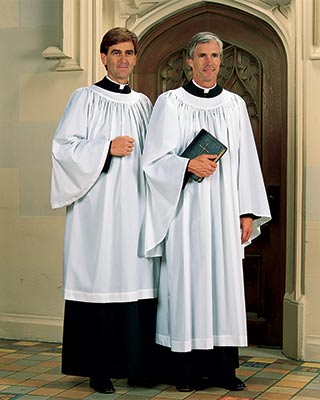
CM Almy... who wore it better?

The two major Rabbis of Christianity, as it were, both present their followers with this idea of circumcision of the heart. That our relationship with the ancient Judaic laws is not supposed to be external, physical, and literal but internal, spiritual, and figurative. The question that has plagued us from then to now, however, is "how does this work?". As humans we always want to know "who wore it better" and while nominally one could judge who wears physical circumcision better one cannot judge who wears a spiritual circumcision better. Thus we have forever been plagued with individuals and groups recasting or creating a fresh a new set of physical circumcisions, of outward acts, that mark a person clean or unclean. Much of Christianity has, indeed, been plagued by this very reality.

The historic maxim seems to be this... that we either create a list of known good acts and known evil acts, some redaction of the Judaic law, or we descend into moral anarchy, relativism, and utter hedonism. There has to be an external, physical, literal moral and ethical law set or all is chaos. My continued critique is that this is the easy way out. This is cheap morality and ethics. This is the path of Christians who want to feel good about themselves in their own righteousness by checking off the good boxes and avoiding checking off the bad boxes. This is, in reality, a kind of negative hedonism. It is just as sinful to rise to a height of debauchery as to define oneself by not rising to such heights. One is allowing debauchery to be what defines you and Christians, and people in general, are not called to define themselves by debauchery.

What we are called to define ourselves by is our love of ourselves, our love of our neighbor, and our love of our God, in reality one great harmony with God's love. This path is not a paint by numbers book published by any church, be it based at the Vatican, Canterbury, Wittenberg, or else wise. This is the very messy path that lives into actual relationships and is transformed by them. It is a reality that constantly calls into question our literal, physical, external rules of right and wrong and ask ourselves wether they are, in fact, stopping us from having actual relationships with ourselves, with those around us, and with God. It is a reality that calls us to listen to when others tell us that our literal, physical, external rules are are, in fact, stopping them from having actual relationships with themselves, with us, and with God.

To do this, however, we have to walk away from our certainty. Our certainty in our circumcision, our certainty from eating only the right food in the right way, our certainty in the rules by which we define our goodness... and risk our hearts being once again being transformed in a world where it is impossible to tell who wears it better.     


Sunday, May 3, 2015

What is Your Fruitiness Factor? The basis of ethics and morals.

Those who abide in me and I in them bear much fruit, because apart from me you can do nothing. Whoever does not abide in me is thrown away like a branch and withers; such branches are gathered, thrown into the fire, and burned.
                                                John 15:5-6

A recurring theme, for many, in the realm of morals and ethics is a code of actions, some good but many bad, to which we need a disciplinarian. This is a reoccurring theme in many cultures, Christian ones as oft as any other if not more so. Which is odd because Paul specifically marks that Christians are not to be subject to a disciplinarian. (Gal. 3:25) Perchance this is a verse many have chosen to ignore in the text but for me it is always a rather prominent one.

There is a tendency to hold that a lack of a disciplinary rule leads only to the concept of outright hedonism, “do what you will shall be the whole of the law’. It is the absurd idea that the only reason Christians are good is that they have a stern disciplinarian who will burn them eternally if they do not do what is unnatural and inherently problematic, follow the disciplinarians rule book. It is the absurd idea that those who do not have the carrot of eternal paradise would, for some reason, become hedonistic, self-serving, perpetrators of evil if the carrot disappeared. The only reason for “goodness” is a God with a rod.

There might be a worse place to start a foundation for ethics and morals but an entire doctrine based on shame and threats of violence is decidedly not one of them. Shame never teaches any one anything, at best it halts problematic behavior for a short while but it never changes underlying behavioral norms. Violence, or threats of violence, is an equally bad teacher, as it does not prompt any internal change from within but forces complacency for the sake of survival.

Which is why in one of the earliest surviving Christian texts we have Paul clearly repeating a known truth of the Jewish scripture, now made fully known in Christ, that the point of the law is not that of a shaming and violent disciplinarian and that, indeed, in Christ there is no more need for any disciplinarian. Without a disciplinarian, in Christ, we should recognize that “the whole law is summed up in a single commandment, ‘You shall love your neighbor as yourself’”. (Gal 5:14) What we should recognize, as Christians, is that abandonment of disciplinary law is not a call to hedonism of self but a mutual call to fullness of self and other in love. Indeed, disciplinary law must be given up because of how readily it prevents us from entering into this mutual call.

If not upon a disciplinary law with shame and violence than on what should be base our morals and ethics. Does this mutual call motif have any form of litmus test? I believe that intrinsically it does and that the scale by which we gauge it is fruitiness, specifically seeking a high fruitiness factor. John notes that Jesus came so that we might have life, and have it abundantly… and that such life in Christ will bear fruit while life away from Christ will be barren. So the questions of morality and ethics are answered by looking at a situation’s fruitiness factor. 

To be clear, as one must, fruitiness factor is not hedonism. It is not about feeling good, being ephemerally happy, having what one wants, material possessions, etc.. Fruitiness factor, abundant life, is about a life that is centered and grounded, a life that leads a person to be aware of their own dignity and the dignity of others, a life with trials and pain but inherently growth and joy as well. It is a life built on mutuality with each other in the love of Christ. When we find that mutuality of living into the whole of the law we encounter Christ’s fruit in the world. When we do not find it we encounter the dried up reality that is life without the love Christ’s has brought to us all.

This is the nature of grace, this fruitiness, a grace that abounds across creation on account of Jesus’ actions. This grace is not contained to those who have been baptized, or had a moment of being saved, or can profess a certain creed, but is a great remaking of the underlying fabric of reality by the Word of God. It is by the work of this Grace, this love that triumphed beyond our warped conceptualizations of morality based on a violent and shameful disciplinary law, that is the foundation of Christian ethics.

So when we look at a situation we no longer ask, does it fit into the laws of the disciplinarians rulebook. We should indeed look at the rulebook, for the rules there are supposed to point us towards the summary of the law, but that is only a place to gauge what is often the case of a situation. The true ask is wether or not there is fruitiness in the situation or bareness. The true ask is does the situation bring a person to a grounded and centered place where they encounter love in Christ, or does the situation bring a person to a place where they feel shame, an absence of God, and the threat of violence unless they conform. We have to put aside what we think makes a grounded and centered place where a person can encounter God's love and actually survey wether or not such is being experienced by the person and those around them. It is only when we allow that mutuality of discernment and recognition of dignity in the others that we truly recognize the Grace of the Word of God in the world and those around us and abandon the rulebook to which we cling in our idolatry of the god of the rod.   


Wednesday, January 21, 2015

The failure of modesty for the sake of others...

“God will see you get the rape you deserve!” this is a phrase heard regularly on the campus of the school where I serve as chaplain. One of the male students feels he is compelled by God to inform female students when their dress is immodest to a point that they deserve the consequences of the lust they are eliciting from the men around them.  This is the consequence of a certain theory of why we should be modest.

The theory is that the reason a person should be modest in dress is so that they do not evoke the lust of those around them. That it is my duty to wear a certain type of clothing so that those around me will not have cause to think of me as a sexual being, thus will not be lead to impure thoughts or
impure actions about me. Basically that by sacrificing any outward acknowledgement that I am a sexual being from the world and completely internalizing it, I am serving those around me to keep their sexualities equally internalized and not active. There is then a very specific place, nominally the marriage bed, where all of the boxed in never expressed sexuality is allowed to burst free.

What this theory does is blame individuals for the lust they elicit, and the consequences of that lust. Now the way it is normally phrased is as an act of good will, of sacrificing a bit of personal expression to keep those around us from falling off the path of righteousness. Such capacity does not, however, work only one way. If I am responsible for helping maintain an atmosphere around me that is lustless then I am also responsible for when my dress creates an atmosphere that is lustful. If I am to be championed for aiding in other’s not entering into lust then I am to be rejected for when I aid in causing another, outside of very restricted situations, to lust. If I am allowed to take responsibility for aiding others in abstaining from lust then I must also take responsibility for aiding others in obtaining lust, and the consequences of those lust… even if that lust results in my harassment, rape, or murder.

So we have those who sexually harass and abuse those around them, like the preacher on my campus, feel they are free to do so because by the way a woman decides to dress they assume they are given some form of consent. We have students on campus encountering sexual violence because a certain form of immodest dress is construed to be an open invitation for lust, and acting upon that lust. So we have trials where what an individual was wearing at the time they were raped is gone over in minute detail, as if that was the key to understanding consent.
So we have victims of harassment and rape feeling that they are to blame for their perpetrators actions, not coming forward, and not receiving the vital help we need.

There are other reasons why this theory for modesty is bogus. Instead of seeking for people to responsibly and maturely understand their sexuality and desires and bring them into a healthy and fulfilling fruition it asks them to repress and stunt their sexuality and desires to a place of attrition; a pressing point for further consideration. Instead of responding to actual research on the nature of attraction and sexual desire it presupposes conditions that do not have a natural basis; an inherent flaw for any theory that wishes to stand as reasonable.  The point of this post, however, is simply to express the horrors that result when individuals are held responsible, on account of their dress, for controlling the amount of lust held by those around them.  

There are reasons to dress in what can be considered modest dress. There ways to properly structure our lives so that we are both aware of sexuality and desires but not abusing them. The theory that modesty is important so that we control the lust of those around them, and are responsible for their consequences, simply is not one of them.