reflections of a barely millennial episcopal chaplain...
Showing posts with label sin. Show all posts

Sunday, August 30, 2015

Who wore it better: circumcision of the heart

I grew up preparing for confession with the traditional St. Augustine's Prayer Book. I cannot think of a more conservative anglo-catholic method of going about the sacrament of reconciliation. What this taught me, very quickly, was that morality was relative. The entire process is one where a sin is presented, over sleeping, but then its opposite, not resting enough, is presented. It is an entire paradigm of damned if you do and damned if you don't. The point is to extract oneself from a list of right and wrong acts and bring one to a space of reflection on ones relationship with oneself, with others, and with God. Where there is dissonance, broken relationships, pain, and barriers to grace is where one recognizes sin... not where one can put a check mark next to a "good" act or an "evil" act.  

Jesus said “Listen to me, all of you, and understand: there is nothing outside a person that by going in can defile, but the things that come out are what defile.” For it is from within, from the human heart, that evil intentions come: fornication, theft, murder, adultery, avarice, wickedness, deceit, licentiousness, envy, slander, pride, folly. All these evil things come from within, and they defile a person.”                                      Mark 7: 15, 21-23

http://www.aafp.org/afp/1998/0915/p891.html
One of the questions that percolates throughout Judaism during the time of Jesus Christ was the question of how were "modern" Jews called to live into the ancient practices of Judaism. This question was pressing while Jesus was alive but became overwhelmingly pressing after the destruction of the Jerusalem Temple in 70 CE. Various Rabbis interpreted the laws and came up with different set of expectations. A properly observant Jew would choose a Rabbinical school to follow and their observance would be measured against their discipleship to that school. Rabbis might disagree on how to interpret a rule, and argue without end, but the importance for the disciple was the living out an observance of their Rabbi's interpretation for the entire law.

Sometimes Jesus is super radical, and sometimes he says something that other Rabbis were saying as well. There is only one self identified Pharisee from this time whose writings remain in existence and this is the former Pharisee, Paul. He did not have access to the Gospel of Mark, or the other later Gospels, yet we find in the writings of Paul, specifically the second chapter of Romans, a very similar maxim: "
For a person is not a Jew who is one outwardly, nor is true circumcision something external and physical. Rather, a person is a Jew who is one inwardly, and real circumcision is a matter of the heart—it is spiritual and not literal. Such a person receives praise not from others but from God."
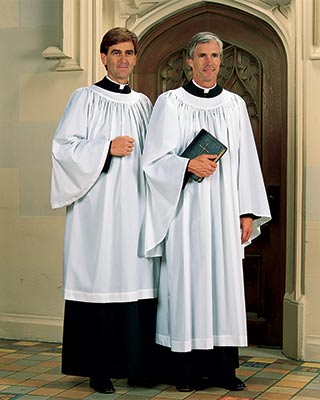
CM Almy... who wore it better?

The two major Rabbis of Christianity, as it were, both present their followers with this idea of circumcision of the heart. That our relationship with the ancient Judaic laws is not supposed to be external, physical, and literal but internal, spiritual, and figurative. The question that has plagued us from then to now, however, is "how does this work?". As humans we always want to know "who wore it better" and while nominally one could judge who wears physical circumcision better one cannot judge who wears a spiritual circumcision better. Thus we have forever been plagued with individuals and groups recasting or creating a fresh a new set of physical circumcisions, of outward acts, that mark a person clean or unclean. Much of Christianity has, indeed, been plagued by this very reality.

The historic maxim seems to be this... that we either create a list of known good acts and known evil acts, some redaction of the Judaic law, or we descend into moral anarchy, relativism, and utter hedonism. There has to be an external, physical, literal moral and ethical law set or all is chaos. My continued critique is that this is the easy way out. This is cheap morality and ethics. This is the path of Christians who want to feel good about themselves in their own righteousness by checking off the good boxes and avoiding checking off the bad boxes. This is, in reality, a kind of negative hedonism. It is just as sinful to rise to a height of debauchery as to define oneself by not rising to such heights. One is allowing debauchery to be what defines you and Christians, and people in general, are not called to define themselves by debauchery.

What we are called to define ourselves by is our love of ourselves, our love of our neighbor, and our love of our God, in reality one great harmony with God's love. This path is not a paint by numbers book published by any church, be it based at the Vatican, Canterbury, Wittenberg, or else wise. This is the very messy path that lives into actual relationships and is transformed by them. It is a reality that constantly calls into question our literal, physical, external rules of right and wrong and ask ourselves wether they are, in fact, stopping us from having actual relationships with ourselves, with those around us, and with God. It is a reality that calls us to listen to when others tell us that our literal, physical, external rules are are, in fact, stopping them from having actual relationships with themselves, with us, and with God.

To do this, however, we have to walk away from our certainty. Our certainty in our circumcision, our certainty from eating only the right food in the right way, our certainty in the rules by which we define our goodness... and risk our hearts being once again being transformed in a world where it is impossible to tell who wears it better.     


Sunday, March 29, 2015

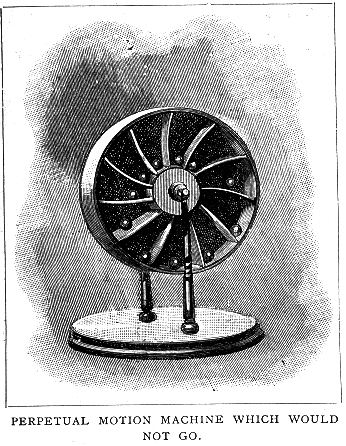
Engaging the Christian Perpetual Motion Machine…

We start the morning at the height of celebration, parades and cries of Hosanna In The Highest… About half way through we are in the midst of a stark play of dire monologues, death, despair, dispersion and cries of Crucify Him… and then we try to make sense of these opposing spaces in the midst of the Eucharist.  

To be honest I am not a huge fan of Palm/Passion Sunday liturgically. I honestly think that this is the one Sunday of the year that our liturgies are simply not ready to even try to maintain. I think that is why it so often is an over the top production in parishes, by making so much of it we can ride the wave of the day without ever plunging into the depths. We put on the biggest show on earth in order to avoid looking at what is going on behind the curtain.

There is a problem facing the church, the community as a whole faces it and the individuals in its must grapple with it personally. On one level there is the constant call for self-denial, purgation, and recognition of our sins. This is a historic reality, it is where many of our older liturgies call us, it has, for good reason, faced much criticism over the past half a century. On the other level is this constant call for rejoicing in the grace of God, being assured of our own blessedness, and recognition that we are children of God and God is well pleased. This is a historic reality, but one to which we have been perhaps overly fond of over the last half a century as we engaged in a necessary response but, in my mind, too often have overdone it.

The reality is that we are in this constant motion between these two callings as Christians. The call for deep, and even caustic, introspection to ask are we truly living out our lives in harmony with God and also the call to know that the Grace of God fills and fulfills us. The reality being that it is actually impossible to know one without the other. We, however, seem to fixate on one and reject the other which is inherently problematic regardless of where we fixate. Where there is supposed to be perpetual motion about these levels there is instead a tendency to stagnate at one end or the other.

My guess is that everyone is aware of the problem of overly fixating on self denial, purgation, and recognition of our sins. We have been deconstructing that one for half a century. The issue is that there is an equal problem with overly fixating the assurance of our own blessedness, of rejoicing in the grace of God, of knowing that we are beings in whom God is well pleased. The blunt reality is that we are not living in full harmony with the will of God and that we need to regularly stop and work out what is blocking us from being in such a state. If we don’t do that we are entering into a cheap ephemeral grace, a grace that only meets us at the points where we are willing to look, not the Grace of God which meets us in the midst of the points in our lives where we strive to never look.

Palm/Passion Sunday is the day that these two realities are presented to us at one time. It is the day that calls us to confront fully both at the same time, to be called from one to another and back again in the course of a single service. It is the day that is supposed to restart a perpetual motion in the church and in each worshipper to forever be moving from one place to another, to never be too caught up in our sinfulness as to not encounter grace, but also never so caught up in the idea of grace, that we do not allow us to encounter it meeting our sin.

So the question, in the end, is can we get the Christian Perpetual Motion machine going? We have gotten unstuck from quagmire of self-denial and focus on sin and deprivation that we were caught in so long... but have we in the midst of that become too ungrounded and refuse to recognize that our feet are quite dirty and in need of a wash. If we cannot constantly be looking for the movement of our selves and our communities in and about both realities, our sinfulness and our gracefulness, then we will never be able to fully engage the reality of either.