reflections of a barely millennial episcopal chaplain...

Monday, March 18, 2019

Of Palms and Passions, A Narrative Eucharist for Holy Week

Of Palms and Passions
A Narrative Eucharist for Jesus’ Last Week

Our Eucharistic worship has a normal pattern. This service disrupts that pattern and places the elements of the Eucharist within the narrative presented in the final chapters of Matthew’s Gospel.   

Celebrant        The Lord be with you.
People             And with thy spirit.
Celebrant        Lift up your hearts.
People             We lift them up unto the Lord.
Celebrant         Let us give thanks unto our Lord God.
People             It is meet and right so to do.
Celebrant        It is very meet, right, and our bounden duty, that we should at all times, and in all places, give thanks unto thee, O Lord, almighty, everlasting God. Creator of the light and source of life, who hast made us in thine image, and by water and the Holy Spirit hast made us a new people in Jesus Christ our Lord. Bring this same spirit into our midst, may this bread and wine be for us the body and blood of Jesus Christ and may we be made more deeply aware of him who for our sins was lifted high upon the cross, that he might draw the whole world to himself. Be with us as we recount the final days of Jesus’ life. 
Leader             Jesus and the disciples were near Jerusalem on the days before the celebration of unleavened bread. As they approached the city Jesus sent two of his disciples on an errand; 
Celebrant        Go into the village that faces you and the first thing you will find there will be a she-ass tethered, and a foal at her side; untie them and bring them to me. And if anyone speaks to you about it, tell them, The Lord has need of them, and they will let you have them without more ado.
Leader             The disciples went and did as Jesus told them; they brought the she-ass and its colt, and saddled them with their garments, and bade Jesus mount. Most of the multitude spread their garments along the way, while others strewed the way with branches cut down from the trees. And the multitudes that went before him and that followed after him cried aloud, 
People             Hosanna for the son of David, blessed is he who comes in the name of the Lord, Hosanna in heaven above.
Leader             Then Jesus went into the temple of God, and drove out from it all those who sold and bought there, and overthrew the tables of the bankers, and the chairs of the pigeon-sellers.
Celebrant        My house shall be known for a house of prayer, and you have made it into a den of thieves.  
Leader             And those who were blind and lame who came up to him in the temple, and he healed them there. The chief priests and scribes saw the miracles which he did, and the children that cried aloud in the temple, 
People             Hosanna for the son of David, blessed is he who comes in the name of the Lord, Hosanna in heaven above.
Leader             The chief priest and scribes were greatly angered. To this Jesus replied,
Celebrant        Have you never read the words, Thou hast made the lips of children, of infants at the breast, vocal with praise?
Leader             Afterwards Jesus came into the temple; and while he was teaching there, the chief priests and elders approached him, asking, What is the authority by which thou doest these things, and who gave thee this authority?  Jesus answered them, 
Celebrant        I too have a question to ask; if you can tell me the answer, I will tell you in return what is the authority by which I do these things. Whence did John’s baptism come, from heaven or from earth?
Leader             Whereupon they cast about in their minds; If we tell him it was from heaven, they said, he will ask us, Then why did you not believe him? And if we say it was from earth, we have reason to be afraid of the people; they all look upon John as a prophet. And they answered Jesus, We cannot tell. He, in his turn, said, 
Celebrant        And you will not learn from me what is the authority by which I do these things.Have you never read those words in the scriptures, The very stone which the builders rejected has become the chief stone at the corner; this is the Lord’s doing, and it is marvellous in our eyes? I tell you, then, that the kingdom of God will be taken away from you, and given to a people which yields the revenues that belong to it.  As for the stone, when a man falls against it, he will break his bones; when it falls upon him, it will scatter him like chaff. 
Leader             The chief priests and the Pharisees saw clearly that it was of themselves he was speaking, and would gladly have laid hands on him, but they were afraid of the people, who looked upon him as a prophet.
People             Hosanna for the son of David, blessed is he who comes in the name of the Lord, Hosanna in heaven above.
Leader             And Jesus continued to frustrate the Pharisees and Sadducees and one of them, a lawyer, put a question to try Jesus: Master, which commandment in the law is the greatest? Jesus said to him,
Celebrant        Thou shalt love the Lord thy God with thy whole heart and thy whole soul and thy whole mind. This is the greatest of the commandments, and the first. And the second, its like, is this, Thou shalt love thy neighbour as thyself. On these two commandments, all the law and the prophets depend… What is your opinion concerning Christ? Whose son is he to be?
Leader             They told him, David’s. 
Celebrant        How is it then that David is moved by the Spirit to call him Master, when he says: ‘The Lord said to my Master, Sit on my right hand while I make thy enemies a footstool under thy feet?’  David calls Christ his Master; how can he be also his son?
Leader             None could find a word to say in answer to him, nor did anyone dare, after that day, to try him with further questions.
People             Hosanna for the son of David, blessed is he who comes in the name of the Lord, Hosanna in heaven above.

HYMN: ALL GLORY, LAUD, and HONOUR

Leader             And Jesus admonished the crowds, the scribes, the Pharisees, and the Sadducees… Then Jesus left the temple, and was going on his way, when his disciples came up to shew him the view of the temple building. Jesus said to them 
Celebrant        Do you see all this? Believe me, there will not be a stone left on another in this place, it will all be thrown down.
People             We pray for the throwing down of systems of oppression.
Celebrant        Take care that you do not allow anyone to deceive you. Many will come making use of my name; they will say, I am Christ, and many will be deceived by it.
People             We pray for the end of spiritual abuse.
Celebrant        And you will hear tell of wars, and rumours of war; see to it that you are not disturbed in mind; such things must happen, but the end will not come yet.
People             We pray for perseverance amidst struggle.
Celebrant        Nation will rise in arms against nation, kingdom against kingdom, and there will be plagues and famines and earthquakes in this region or that;
People             We pray for all who suffer and are afflicted.
Celebrant        Friends will give you up to persecution, and will put some to death; all the world may hate you because you cherish my name;
People             We pray for victims of hate, those who are killed for who they are.
Celebrant        The charity of many will grow cold, as they see wickedness abound everywhere; but they will be saved who endure to the last.
People             We pray that our hearts will be open and our vision for love.
Leader             And with these and other words Jesus admonished his disciples and followers preparing them for his death as they prepared for the days of unleavened bread. As that day approached they asked him, ‘Where wilt thou have us make ready for thee to eat the paschal meal?’. Jesus replied,
Celebrant        Go into the city, find such a man, and tell him, The Master says, My time is near; I and my disciples must keep the paschal feast at thy house.
Leader             The disciples did as Jesus bade them, and made all ready for the paschal meal there. When evening came, he sat down with the disciples, and, while they were at table, he said, 
Celebrant        Believe me, one of you is to betray me.
Leader             They were full of sorrow, and began to say, one after another, 
People             Lord, is it I?
Celebrant        The one who has put his hand into the dish with me will betray me. The Son of Man goes on his way, as the scripture foretells of him; but woe upon that one by whom the Son of Man is to be betrayed; better for that one if they had never been born.
Leader             And while they were still at table, Jesus took bread, and blessed, and broke it, and gave it to his disciples, saying, 
Celebrant        Take, eat, this is my body
Leader             Then he took a cup, and offered thanks, and gave it to them, saying, 
Celebrant        Drink, all of you, of this; for this is my blood, of the new testament, shed for many, to the remission of sins. And I tell you this, I shall not drink of this fruit of the vine again, until I drink it with you, new wine, in the kingdom of my Father.

HYMN: SANCTUS

the bread and wine are distributed

Celebrant        To-night you will all lose courage over me; for so it has been written, I will smite the shepherd, and the sheep of his flock will be scattered. But I will go on before you into Galilee, when I have risen from the dead.
People             I will never disown thee, though I must lay down my life with thee.
Leader             So Jesus left, and they with him, to a Garden called Gethsemani, and he said
Celebrant        Sit down here, while I go in there and pray. My soul, he said, is ready to die with sorrow; abide here, and watch with me…My Father, if it is possible, let this chalice pass me by; only as thy will is, not as mine is… My Father, if this chalice may not pass me by, but I must drink it, then thy will be done.
Leader             As Jesus prayed thus for hours his disciples could not stay awake and watch. Thus, Judas, who was one of the twelve, came near; with him was a great multitude carrying swords and clubs, who had been sent by the chief priests and the elders of the people. The traitor had appointed them a signal; It is none other, he told them, than the man whom I shall greet with a kiss; hold him fast. No sooner, then, had he come near to Jesus than he said, Hail, Master, and kissed him.
Celebrant        The Peace of the Lord be always with you.
People             And also with you.
share a sign of God’s peace

Leader             Then they came forward and laid their hands on Jesus, and held him fast.
Celebrant        You have come out to my arrest with swords and clubs, as if I were a robber; and yet I used to sit teaching in the temple close to you, day after day, and you never laid hands on me. All this was so ordained, to fulfil what was written by the prophets.
Leader             And now all his disciples abandoned him, and fled. As they fled each remembered saying:
People             I will never disown thee, though I must lay down my life with thee.
Leader             The chief priests and elders and all the Council tried to find false testimony against Jesus, such as would compass his death. But they could find none, although many came forward falsely accusing him; until at last two false accusers came forward who declared, 
People             This man said, I have power to destroy the temple of God and raise it again in three days.
Leader             Then the high priest stood up, and asked him, Hast thou no answer to make to the accusations they bring against thee? Jesus was silent; and the high priest said to him openly, I adjure thee by the living God to tell us whether thou art the Christ, the Son of God? Jesus answered, 
Celebrant        Thy own lips have said it. And moreover I tell you this; you will see the Son of Man again, when he is seated at the right hand of God’s power, and comes on the clouds of heaven.
Leader             At this, the high priest tore his garments, and said, He has blasphemed; what further need have we of witnesses? Mark well, you have heard his blasphemy for yourselves. What is your finding? And they answered, 
People             The penalty is death. 
Leader             Then they fell to spitting upon his face and buffeting him and smiting him on the cheek, saying as they did so, 
People             Shew thyself a prophet, Christ; tell us who it is that smote thee.
Leader             At day-break, all the chief priests and elders of the people laid their plans for putting Jesus to death, and they led him away in bonds, and gave him up to the governor, Pontius Pilate. And now Judas, his betrayer, was full of remorse at seeing him condemned, so that he brought back to the chief priests and elders their thirty pieces of silver; saying
PeopleI have sinned in betraying the blood of an innocent man.
What is that to us? they said. It concerns thee only. Whereupon he left them, throwing down the pieces of silver there in the temple, and went and hanged himself. Meanwhile Jesus stood before the governor while the chief priests and elders brought their accusation against him, he made no answer. Then Pilate said to him, Dost thou not hear all the testimony they bring against thee? But Jesus would not answer any of their charges, so that the governor was full of astonishment. At the festival, the governor used to grant to the multitude the liberty of any one prisoner they should choose; and there was one notable prisoner then in custody, whose name was Barabbas; so, when they gathered about him, Pilate asked them, Whom shall I release? Barabbas, or Jesus who is called Christ? 
People             Barabbas
Leader             Pilate said to them, What am I to do, then, with Jesus, who is called Christ?
People             Let him be crucified.
Leader             And when the governor said, Why, what wrong has he done? they cried louder than ever, 
People             Let him be crucified.
Leader             And so, finding that his good offices went for nothing, and the uproar only became worse, Pilate sent for water and washed his hands in full sight of the multitude, saying as he did so, I have no part in the death of this innocent man; it concerns you only. And the whole people answered, 
People             His blood be upon us. 
Leader             And with that he released Barabbas as they asked; Jesus he scourged, and gave him up to be crucified. The governor’s soldiers took Jesus into the palace, and gathered the whole of their company about him. First they stripped him, and arrayed him in a scarlet cloak; then they put on his head a crown which they had woven out of thorns, and a rod in his right hand, and mocked him by kneeling down before him, and saying,
People             Hail, king of the Jews
Leader             And they spat upon him, and took the rod from him and beat him over the head with it. At last they had done with mockery; stripping him of the scarlet cloak, they put his own garments on him, and led him away to a place called Golgotha, that is, the place named after a skull. Here they offered him a draught of wine, mixed with gall, which he tasted, but would not drink, and then crucified him, dividing his garments among them by casting lots. There, then, they sat, keeping guard over him. Over his head they set a written proclamation of his offence, 
People             This is Jesus, the king of the Jews
Leader             and with him they crucified two thieves, one on his right and one on his left. The passers-by blasphemed against him, tossing their heads; 
People             Come now, thou who wouldst destroy the temple and build it up in three days, rescue thyself; come down from that cross, if thou art the Son of God.
Leader             The chief priests, with the scribes and elders, mocked him in the same way. 
People             He saved others he cannot save himself. He trusted in God; let God help him now.
Leader             Then there was darkness over all the earth until the ninth hour when Jesus cried out with a loud voice, 
Celebrant        Eli, Eli, lamma sabachthani? My God, my God, why hast thou forsaken me?
Leader             Hearing this, some of those who stood thought he was calling upon Elias: and thereupon one of them ran to fetch a sponge, which he filled with vinegar and fixed upon a rod, and offered to let him drink; many wondered whether Elias would come and save him. But then Jesus cried out again with a loud voice, and yielded up his spirit. And all at once, the veil of the temple was torn this way and that from the top to the bottom, and the earth shook, and the rocks parted asunder; and the graves were opened, and many bodies arose out of them, bodies of holy ones gone to their rest: who, after his rising again, left their graves and went into the holy city, where they were seen by many. So that the centurion and those who kept guard over Jesus with him, when they perceived the earthquake and all that befell, were overcome with fear; 
People             No doubt, but this was the Son of God.
Leader             Many women stood watching from far off; they had followed Jesus from Galilee, to minister to him; among them were Mary Magdalen, and Mary the mother of James and Joseph, and the mother of the sons of Zebedee. And now it was evening, and a man came forward, by name Joseph, a rich man from Arimathea, who followed Jesus as a disciple like the rest; he it was who approached Pilate, and asked to have the body of Jesus; whereupon Pilate ordered that the body should be given up. Joseph took possession of the body, and wrapped it in a clean winding-sheet; then he buried it in a new grave, which he had fashioned for himself out of the rock, and left it there, rolling a great stone against the grave-door. When he had gone, there were two who sat on there opposite the tomb, Mary Magdalen and the other Mary with her. On the next day, the chief priests and the Pharisees gained permission from Pilate to make the tomb secure and they put a seal on the stone and set a guard over it. The male disciples cowered in locked rooms while the women came to the tomb showing little fear, waiting for the festival of unleavened bread to end so that they could tend the body and begin their time of mourning.  

HYMN: WHERE YOU THERE

 Leader            Do not cower, but wait, showing little fear.
People             Thanks be to God.


Friday, February 16, 2018

Episcopal Doctrine on Gun Control

The Episcopal Church is often mischaracterized as not having doctrinal expectations on issues. This is actually not true. In the Episcopal Church we have a very high theology of personal conscience. This means that amidst the doctrinal expectations of the church individuals, especially laity, are given an exceptional amount of freedom in regard to their personal belief and practice. When the Episcopal church convenes as a council of the church, General Convention, we do make statements of expectations of where our church stands on an issue. This includes a long history of statements regarding Gun Control.

The first such statement is 1976-C052:

ResolvedThat the 65th General Convention of the Episcopal Church, meeting in Minneapolis, September 11-23, 1976, urge the Congress of the United States to adopt effective hand gun legislation as promptly as possible and that this resolution be communicated to the Chairman of the Subcommittee on Crime of the Judiciary Committee of the U.S. House of Representatives, the Senators Birch Bayh and James Eastland of the Judiciary Committee of the United States Senate, and to the President of the National Rifle Association; and be it further
Resolved, That this General Convention urge all citizens to support federal, state, and local legislation aimed at controlling the sale and use of hand guns.

It is important to realize that this first resolution dates back forty years, long before any current political controversy or the heightened issue of regular mass shootings. The Episcopal Church, then, has a long standing history of seeking gun control legislation. The next decade did not see the changes longed for by the Episcopal Church and this prompted 1991-B042:

ResolvedThat the House of Bishops, meeting in the 70th General Convention of the Episcopal Church, reaffirm its support for sound handgun control legislation, a position first taken in 1976; and be it further
ResolvedThat this House of Bishops endorse the so-called Brady Bill now before the Congress of the United States as a first step toward effective handgun control. It is sensible legislation which requires waiting periods and background checks on those persons who wish to purchase handguns; and be it further
ResolvedThat copies of this resolution be sent to the President of the United States, appropriate members of Congress and other appropriate government entities.
The Brady Bill became law in 1993 and yet in the next year the General Convention of the Episcopal Church continued to be concerned about issues of gun control with 1994-D019:
ResolvedThat the Standing Commission on Peace with Justice extend its study of the sale and spread of armaments by adding to its agenda for the coming triennium (without additional budget expense) a review of existing and pending state and national legislation which seeks to:
  1. Limit the manufacture and sale of weapons and ammunition domestically;
  2. Strengthen firearms licensing provisions for both sellers and buyers; and
  3. Restrict the exportation of weapons and weapon parts from the United States.
  4. Tighten restrictions on importation of weapons and weapon parts to the United States.
As things progressed the Episcopal Church's consideration of this issue became broader and we consider gun safety to be more than just gun control, this can be seen at the convention three years later with 1997-D033:

ResolvedThat this 72nd General Convention of the Episcopal Church strongly urge the Congress of the United States promptly to pass national legislation that will apply the same quality and safety standards to domestically manufactured hand guns that are currently applied to imported hand guns; and be it further
ResolvedThat this Resolution be forwarded to the Office of Government Relations of the Episcopal Church for distribution to the proper Congressional authorities.
Here we have a resolution that is about ensuring the safety and quality of guns brought into this country, an issue one would hope very gun enthusiast would see as important. While wanting to ensure that what guns are in our country are safe the same General Convention continued our petition for further gun control legislation.
ResolvedThat this 72nd General Convention, through the Office of Government Relations, urge the Congress of the Unites States to increase restrictions on the sale, ownership and use of firearms, particularly "Saturday night specials" (described as short-barreled, four inches or shorter, easily concealed hand gun); and be it further
ResolvedThat legislation to ban carrying concealed firearms be encouraged; and be it further
ResolvedThat Congress be urged to adopt legislation requiring the Bureau of Alcohol, Tobacco and Firearms to develop regulations to delineate appropriate safety standards for use of firearms, and circumstances under which firearms may be used and to monitor and enforce compliance with said safety standards.
At this point we are looking at decades of consistent resolutions around this issue coming from our General Conventions. This stance existed, solidly, in the Episcopal Church before the current era of mass shootings began. The next general convention, three years later, would be in a post-Columbine world. These events would prompt three resolutions regarding gun control.
2000-D004
Resolved, That the 73rd General Convention express deep concern about the repeated use of easily available hand guns and assault weapons by and against children and call upon Episcopalians to seek ways to develop community strategies and create sanctuaries for our children, so that all may come to identify and value themselves and others as the precious children of God that they are, and that they may come to know peace in their lives and to create peace for future generations.
2000-B007
Resolved, That the 73rd General Convention request members of the Episcopal Church of the United States of America to acknowledge that the violence in our communities is encouraged and enabled by the presence of guns; and be it further
ResolvedThat this Convention call upon all members of the church to work intentionally in their several committees, legislatures, and institutions toward the removal of handguns and assault weapons from our homes, other residential communities, and vehicles.
2000-A006
Resolved, That the 73rd General Convention urge the appropriate departments and agencies of the U.S. government to prohibit the export of handguns.
Note how 2000-B007 and 2000-D004 shift the conversation away from political legislation and to personal responsibility of individuals to take account of their own personal gun ownership and deeply consider the implications of owning guns. It would be twelve years before the general convention would again look at the issue of gun regulation, when we did, it was in regards to regulation on our church properties with 2012-D003:
Resolved, That the 77th General Convention requests every parish and every diocesan place of work to declare their establishments as Gun Free Zones.
This resolution brought our worship communities across the church to take up some very difficult conversations and process the forever more pressing issue of gun ownership and control. Our most recent General Convention added two more resolutions for our consideration.
2015-C005
Resolved, That the 78th General Convention on the 50th anniversary of the murder of seminarian Jonathan Daniels, urge all legislators at federal, state and local levels to help decrease gun violence by implementing laws that;
1. Require permits to carry concealed weapons and criminal background checks for every gun purchase, including those made at gun shows; and
2. Except for the use of military and law enforcement agencies, ban the sale, transfer, importation and manufacture of military-style assault weapons and high-capacity magazines; and
3. Ban the importation and manufacture of Full-Auto Conversion kits that convert guns into automatic weapons; and
4. Tighten laws against gun trafficking, and increase penalties for those who engage in "straw purchases" of firearms for ineligible persons; and
5. Prohibit persons from purchasing guns without evidence of gun safety training; and
6. Recognize the impact of existing inheritance laws on the transfer of gun ownership; and
7. Promote funding for research into the prevention and causes of gun violence.
2015-B008

ResolvedThat the 78th General Convention of The Episcopal Church support handgun purchaser licensing in order to prevent gun violence and save lives; and be it further
ResolvedThat the dioceses of The Episcopal Church be encouraged to advocate for handgun purchaser licensing in their local contexts.
These two resolutions are the strongest made over the past four decades of resolutions considering this subject. They do not, however, represent some new liberalism or politicization of our church's stance on this issue. The Episcopal Church is overwhelmingly in support of exceptionally more robust gun control laws than are currently in use and we have been seeking such to be put in place for nearly half a century.
Now, as stated above, the Episcopal Church does not do much in the way of doctrinal enforcement and we leave much up to personal conscious on any issue including this one. There are many Episcopalians I know who responsibly own guns and often for exceptionally sound reasons of personal safety. They live out their gun ownership as if the expectations sought by the church of our legal code were already in place. 
What then is expected of Episcopalians? We must be knowledgable of the above resolutions and take up personally any requests they make of us. If asked if the Episcopal Church has a doctrine on gun ownership and gun safety it is the prerogative of every Episcopalian to say yes, explain the reality of our resolutions on the subject, and then explain their own conscious regarding the issue. At this point in the crisis we are facing in the United States no Episcopalian should be ignorant of our denomination's long standing expectation on this issue.


***
To view these and all resolution of the episcopal church go to: https://www.episcopalarchives.org/e-archives/acts/

Wednesday, August 31, 2016

The Bible, Breviary, Daily Office Hack

Can a Bible be turned into a Prayer Book? 

Specifically can we basically reverse engineer the basic form of a Breviary into any Bible in a way that is readily useable for daily prayer?

Over the past decade this idea has percolated in my head and the more I thought about it the more I believed that not only could it be done but should be tried. 

Do know that about a dozen printed bibles were marked up beyond recognition to bring you this hack. 

What I had to realize is that the end result was going to be very basic. To be functional the liturgical calendar and the calendar of devotion with the saints would have to be jettisoned. Likewise the cycle of regular prayers provided by office books would have to go. For many this will be a deal breaker, for others this will be of little consequence. Personally I am still considering basic means to bring back some of this reality but at this point what I have is a very functional method of daily prayer based in the repetition of the psalms and scriptural devotion. What this method, which I call the Bible Breviary Hack, provides is:

1) A single, readily portable book.
2) Three times of prayer a day, morning, noon, and evening.
3) Full reading of the Bible on a near yearly basis.
4) Four week recitation of the psalter.
5) Maintains use of the scriptural canticles.

Materials needed: 

A Bible: I strongly suggest a Bible with a single column of text, often called a reader's version. Further I do not suggest going with a compact or small Bible, I thought this was a good idea, small is portable, but this hack requires annotating the text and generally I find writing in one's bible an essential reality and for that we need space. The Bible really needs three ribbon markers, as we will be using other forms of place holders along with that. I also suggest getting a solid well bound Bible, just as a general reality. When I finally had all of this together I splurged on a Schuyler Caxton NLT and have not been disappointed. It is simply a beautifully bound book at every level. 

Archival Pens: I strongly suggest Micron Pens for all Bible marking needs. They generally do not bleed through the paper, their ink is archival quality and will not run, blur, or otherwise ruin paper, and the fine point felt tips will not rip or tear the paper. One can find them at most artist supply stores and on amazon. I also sought out a bandolier for my Bible to hold the pens and keep everything else that ends up in my Bible, prayer cards, important photos, and the like, securely inside as I carry it around in my bag. The bandolier shown came from an amazing artist on Etsy called Cleverhands.
The other materials needed are bookmarks and bookdarts. For bookmarks I am using some vintage prayer cards I found at an antique shop for a couple of dollars each. Bookdarts might be a new product for many of you. They are simply an amazing invention that allows one to 'dog ear' a page without harming it. The photo shows one in action and once you start using them they become slightly addictive, especially if one is regularly working on papers and research. You can sometimes find them in independent bookstores but in most towns one needs to go straight to the source or Amazon.


One might also want a straight edge, or even a set of small stencils like those used in scrapbooking, for marking up the Bible in various ways. I used a stencil set I had hanging around for other reasons just because it makes the end result slightly more polished.

Once all, or most, of these materials are gathered (or whatever equivalents you choose) it is time to make the Bible Breviary Hack.

Start by turning the Bible to Luke 1:67. There you will find Zechariah's prophesy, which is the traditional canticle for morning prayer. This is where Morning Prayer starts every day using this process. I put both a book dart and a prayer card on this page of my bible. When it is time for midday prayer one turns back to Luke 1:46 and recites the Magnificat and when it is time for Evening Prayer one goes forward to Luke 2:29 to Simeon's prophecy. These should be on the same page or simply a page flip away. These three songs represent some of the earliest Christian poetry and are the foundation of every part of our daily prayer in this model.
After recitation of the canticle for the time of day we go to the psalms. The major process of this hack is marking the psalms. There is a lot of value in reorganizing the psalms thematically, I will not lie that I miss it a bit, but the biblical order has its own flow and it is, obviously, the easiest to use. This psalm plan is in a four week, 28 day, cycle that expects one to sit down and pray three times a day, nominally morning, noon, and evening. This means one reads around 30 verses of the psalms during each time of prayer. For instance on Day 1 for morning prayer one reads Psalms 1, 2, and 3 then at midday Psalms 4, 5 and 6 then in the evening Psalms 7 and 8. I use a prayer card to hold my place in the psalms. I made up a simple pattern to place around the numbers, three red dots with a green dot that moves from the left, morning, the middle, midday, and the right, evening, to mark the various times of prayer. I then placed an additional mark, roman numerals 1-28, next to the morning psalm that starts that day. The full cycle of psalms I use can be found at the bottom of the article.

After a brief immersion into the psalms it is time to read some scripture. This is straightforward. In the morning read two chapters from the hebrew scriptures. At midday read one chapter from the Mathew, Mark, Luke-Acts, John. In the evening read one chapter from the Epistles or Revelation. One is simply reading the Bible straight through using three different cycles. This will have one read through the Gospels and Acts about once every six months, the rest of the Greek Scriptures in a little less than a year, and the Hebrew Scriptures in a little more than a year. This is why having a bible with three ribbon markers is really important. It simply allows one to readily mark where one is in all three reading cycles. I realize this is a lot of Bible, but I was amazed how different my relationship with the bible became when I started reading it whole cloth in large sections. For those used to lectionary snippets, a concept that has value in so many situations, it is a game changer for one's faith.

We then end with a canticle from the Hebrew Scripture. There are many of these that have been used over the years and I am not using a comprehensive list of all of them Principally I am using canticles that are taken complete from one a set of verses. This is where the bookdarts become essential as we use them to mark where each canticle is within the Bible for easy reference. The little divots one can see amidst the pages are the bookdarts at work. They are non-intrusive but especially easy to find. I generally highlight the specific verses of the canticles, they are often excerpts from much larger poetical works. Another prayer card tracks which canticle should be recited and at the end of the office goes to the next canticle conveniently marked with a bookdart. A complete list of the canticles I have marked can be found after the psalm sequence.

I then generally end the office with a few moments of prayer, anything resting on my heart and mind at the time, followed by the Our Father and the Hail Mary. That is the ins and outs of the Bible Breviary Hack. I would not claim, by any stretch, that it is the solution for daily prayer but I think it is a functional modus that rests distinctly amidst the tradition of the church around breviary work but also allows complete reading of the bible about every year and is also exceptionally portable. Maybe it seems absurd to you, or for a few it looks like a possibility with amazing potential. For those it seems absurd, may you find a solid means to engage prayer and scripture and for those who are inspired I hope it serves you well.

Psalm List
Day
1 Morn 1, 2, 3 Noon 4, 5, 6 Even 7, 8
2 Morn 9 Noon 10, 11, 12 Even 12, 14, 15, 16 
3 Morn 17 Noon 18 Even 19, 20
4 Morn 21Noon 22 Even 23, 24, 25
5 Morn 26, 27 Noon 28, 29, 30 Even 31, 32
6 Morn 33 Noon 34 Even 35, 36
7 Morn 37 Noon 38 Even 39, 40
8 Morn 41, 42, 43 Noon 44 Even 45, 46
9 Morn 47, 48 Noon 49, 50 Even 51, 52
10 Morn 53, 54 55 Noon 56, 57 Even 58, 59
11 Morn 60, 61, 62 Noon 63, 64, 65 Even 66, 67
12 Morn 68 Noon 69 Even 70, 71
13 Morn 72, 73 Noon 74 Even 75, 76
14 Morn 77 Noon 78 1-39 Even 78:40-72 
15 Morn 79, 80 Noon 81, 82 Even 83, 84, 85
16 Morn 86, 87 Noon 88 Even 89
17 Morn 90, 91 Noon 92, 93 Even 94, 95
18 Morn 96, 97 Noon 98, 99, 100, 101 Even 102
19 Morn 103 Noon 104 Even 105
20 Morn 106:1-27 Noon 106:28-48 Even 107
21 Morn 108 Noon 109 Even 110, 111, 112
22 Morn 113, 114, 115 Noon 116, 117 Even 118
23 Morn 119:1-32 Noon 119:33-56 Even 119:57-88
24 Morn 119:89-120 Noon 119:121-144 Even 119:145-176
25 Morn 120, 121, 122, 123 Noon 124, 125, 126, 127 Even 128, 129, 130, 131
26 Morn 132, 133 Noon 134, 135 Even 136
27 Morn 137, 138, 139 Noon 140, 141 Even 142, 143, 144
28 Morn 145 Noon 146, 147 Even 148, 149, 150

Canticles

Exodus 15: 1-18
Deuteronomy 32: 1-14
1 Samuel 2: 1-10
Isaiah 33:13-16; 40:10-17; 42:10-17; 61:10-62:5; 66:10-16
Jeremiah 14: 17b-21; 31:10-14
Habakkuk 3:2-19
 

Sunday, April 10, 2016

Baptism: Reweaving the Body of Christ


Feed my sheep. Very truly, I tell you, when you were younger, you used to fasten your own belt and to go wherever you wished. But when you grow old, you will stretch out your hands, and someone else will fasten a belt around you and take you where you do not wish to go. 
                     -John 21:18

We have been dealt a grave injustice when it comes to the pressing theology of baptism we encounter in our culture. This is not to say that the individualistic, my personal jesus, moment of personal salvation, look at me I am special, modus of baptism is inherently wrong... it is just drastically and overwhelmingly incomplete. It is heretical not in the sense that it is wrong but in the sense that it is disproportionate.

When we baptize an individual we weave a whole new thread into the Body of Christ. We name as essential to that Body something that up to this point was missing. When we get to the end of the right it is not only the individual being baptized that is born a new... it is the entire Body of Christ that has been reborn.

There is a reason why we stray away from this more robust theology. Pivotally it means that Baptism is more than transforming one person to be like Christians... it means that Baptism is transforming Christianity towards an individual. It means, quite possibly, being taken where we might not want to go.

The reality, however, is that Christianity has the capacity to grow old. To stop moving where it is called to go and instead simply go where it wants to go. To no longer seek to transform and be transformed but instead to simply seek conformity. This is why the Proclamation of Christ Crucified from outside of Christianity is so essential for our well being as a church... This is why movement to incorporate said Proclamation in Baptism is so essential. We get pulled where we might not want to be... but in so doing we are made young again because new threads are woven into us, parts we did not even know were missing are now here in our midsts.

So that such which is new goes in the direction it is called, perhaps pulling that which is old in ways it does not want to go, but the Body of Christ is reborn in its midst. Often there are those who do not want to die, who do not want to be reborn, but throughout the church every baptism is a call to just that reality, to recognize the Spirit working in a person whose voice we are just beginning to hear and to enter into the reality where that voice is made old... so that we must begin the cycle again.  

Sunday, March 13, 2016

Judas Icon of Wealth and Misogyny...

A woman has a container filled with something costly.

A man is on a path of sorrow and despair.

The woman seeks to open up her container and bring joy to a man whose path is sorrow.

Another man, in many ways the proverbial man, wishes to maintain his wealth and privilege so he seeks to control what the woman can do with her container and deny the sorrowful man joy.

This is the story of Jesus in the weeks before his crucifixion, this is the story of Mary wishing to see joy on the face of Christ again, this is the story of Judas who would betray christ for the hope of further privilege and wealth.

The story of men wishing to deny others joy, the story of men seeking to control the containers of women, the story of men gaining wealth and privilege by bringing about such denial and control, however, is the one in which we currently live.

The Gospel is that we can look at such men and tell them "NO". No it is not your decision what a woman does with the container she owns. No it is not right to deny a moment of joy to those who are on a path of sorrow. We can fully denounce the attempts of men to maintain power by controlling women and denying joy to others. We can, in fact, recognize them as playing the part of Judas in this story from John's gospel.

The systems of our society are supposed to evoke Mary, breaking the costly jar of ointment for the sake of overcoming the sorrow faced by another. Instead the system of our society evokes Judas, seeking to maintain privilege and wealth by denying joy to others and hoarding and controlling every costly jar of ointment.

When legislatures attempt to control what a woman can and cannot do with her body... When they try to deny certain staple foods to those who receive food stamps... they are taking the role of Judas.

Judas questions a poor family being able to celebrate a birthday with a steak dinner. Judas decides what a woman should do around health issues with never listening to her doctor or her. Judas mocks a homeless person who struggles to maintain the use of a smart phone. Judas dictates that feminine hygiene is a luxury that should be taxed.

Jesus welcomes a moment of celebration in the midst of his sorrow. Jesus allows a woman to break open her costly jar of ointment. Jesus looks upon the one who would deny this moment and denounces his seeking to maintain wealth and privilege.

As christians our goal is to be with the poor, to be of the poor, to bring joy in the midst of sorrow by breaking open our costly jars of ointment. Our goal cannot be to become wealthy and privileged and to maintain wealth and privilege, especially at the costs of others joy and the controlling of others' bodies. We live amidst a system that moves towards making each of us a Judas and we must remember that what Jesus honored was not the man who sought wealth and privilege but the woman who broke her costly jar of ointment for a man homeless and soon to be sentenced to death. We need to work for a system that moves towards making each of us a Mary.

Sunday, March 6, 2016

The Privilege of the Prodigals...

Field Slaves do not get to ask their owners for any type of party, this includes ones with as simple a menu as goat.

Hired Hands do not get to abscond with half their employers wealth and then come back and get hired.

Field Slaves and Hired Hands who do such things get told off, beaten, and lynched.

Today we have a tale of three exceptionally privileged men going about their lives of privilege. Today we have a tale of a group of slaves and hired hands whose very reality is ignored by those who own them and control their lives. Today we have a tale where the privileged party and bicker while the slaves and hired hands are given more work to do.

Both brothers construe themselves as being on a level with the hired hands or slaves of their father's house. Interestingly enough it is the brother who all but owns the slaves that considers himself like unto the slaves... One can just imagine an actual slave overhearing this comment and stifling laughter to ensure his future owner does not beat him to near death. This is a man who has no comprehension of his privilege or awareness of the reality of others.

The other brother has actually encountered a touch of reality. He is aware of the fact that he is, if nothing else, not a slave. He is aware of the fact that he has remaining to him the privilege of familial connections. A privilege that his brother would like to see stripped from him but that his father is willing to still recognize.

Then there is the father. The father who still has lands, hired hands, and slaves. The father who still has enough luxurious cloaks that he has to specify which one he wants. The father whose wealth is such that he can place a jeweled ring on the hand of his son and not consider the balance of the inheritance owed to his other son. The father who had lost one son but still had another to whom to give all his worldly privilege. The Father who now has the privilege of a second chance to have a family reconciled and whole.

The story ends at this point, with the father struggling for the reconciliation his privilege cannot provide him, one brother fuming amidst his privilege, the other being granted overwhelming luxury because of his privilege... and the slaves and hired hands forced to suddenly put all their other work on hold to organize and implement a party and its clean up.

If one wants to ask who is God in the midst of this the answer is simple. God is the slaves and hired hands, the ones the brothers readily compare themselves to but do not truly understand. God is the one working and striving all around us for our well being, and pleasure, despite our lack of thanks, praise, and honor. God is the one we are separated from because of the privilege we refuse to leave behind. God is the one we would find if we took the time to recognize the dignity of the hired hand and slaves in our midst and responded to it with the love that we are called, again and again, to respond with.

Saturday, February 27, 2016

Corporate Prisons: Pilate continues to mingle the blood...

See here! For three years I have come looking for fruit on this fig tree, and still I find none. Cut it down! Why should it be wasting the soil?' 
-Luke 13:7b

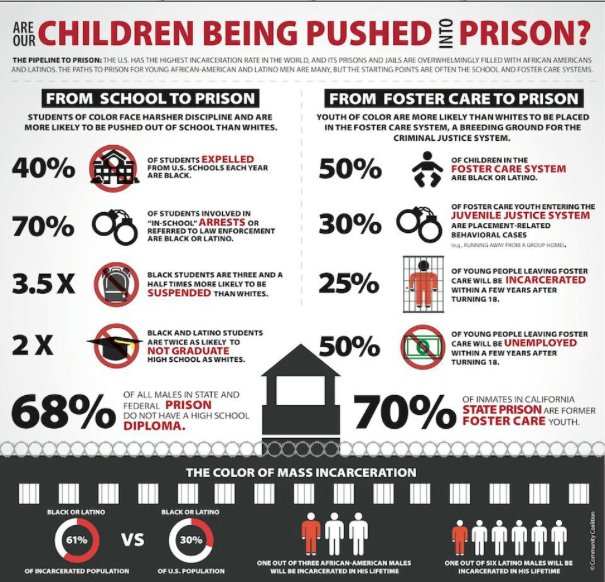
Arizona, like many states, has chosen to cut education funding while increasing the funding for incarceration. As Pilate taught politicians centuries ago it is simply easier to snuff the light out of problematic populations than to actually value their existence as human beings. It was inherently easier for Pilate to simply murder another set of Galilean dissidents, this time as they worshipped at the temple, than to actually alleviate the issues causing the dissidence to begin with. It is simply easier for the Governor of Arizona to hand our youth, especially our youth of color, over to enslavement within corporate prisons than it is to alleviate the issues facing our communities, including the severe lack of a robust and funded education system. 

Surely, however, those sent to prison are more deserving of such, on account of their sin, than others. In the vast majority of cases, especially the cases that essentially provide slave labor for corporate prisons, the reality is that they are not more sinful than those who are not so enslaved. It is just that they do not have the material wealth, and the skin tone, to readily avoid being sentenced to such. There are those whom we must restrain for the basic safety of others, the majority of those corporate prisons profit from are not such individuals. It is easier, and a far quicker profit, to imprison them, however, than to nurture and care for them.

As Christians we simply are not allowed to enter into and condone these actions. We are not allowed to assume that those imprisoned are simply more sinful than those who manage to avoid imprisonment. Sometimes a tower crumbles, sometimes a police action profiles a certain ethnic group, the people in that tower and the people in that ethnic group are not spectacularly more sinful or deserving of their fate... they are simply the ones at the wrong place at the wrong time. Pilate focused his police actions on Galileans, whom he perceived as inherently dissident. Our current government focuses its police actions on People of Color, a group America has viewed as subhuman from the signing of our constitution.

As Christians we are not allowed to simply strike a person from the soil. We are not allowed to simply watch as those in power cut down the lives of those around us through imprisonment and lethal force. Our duty is to stand between the powerful and those they wish to abolish. Our duty is to clearly state that, despite what the powers might be, no one is a waste of space.

As Christians we are, in fact, called to go farther. We must ensure that basic realities, such as nourishment, attention, and care are provided to those who are at risk of being destroyed by the forces our government places against them. We are, indeed, called to bring about a system where such things are readily provided, with out question, to each and every individual as a basic reality.

To do otherwise is to not stand with Jesus, but with Pilate... and to stand with Pilate is to stand with the very part of humanity that longs to sacrifice others, even God, for the sake of power and the maintaining of privilege.