reflections of a barely millennial episcopal chaplain...

Sunday, August 30, 2015

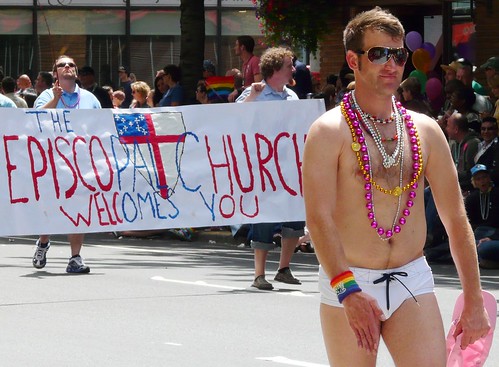
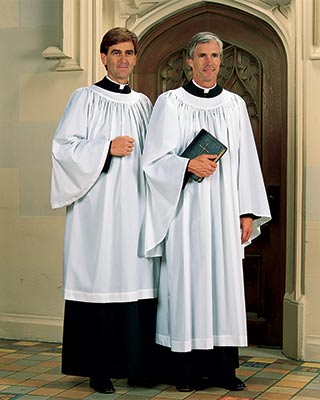
Who wore it better: circumcision of the heart

I grew up preparing for confession with the traditional St. Augustine's Prayer Book. I cannot think of a more conservative anglo-catholic method of going about the sacrament of reconciliation. What this taught me, very quickly, was that morality was relative. The entire process is one where a sin is presented, over sleeping, but then its opposite, not resting enough, is presented. It is an entire paradigm of damned if you do and damned if you don't. The point is to extract oneself from a list of right and wrong acts and bring one to a space of reflection on ones relationship with oneself, with others, and with God. Where there is dissonance, broken relationships, pain, and barriers to grace is where one recognizes sin... not where one can put a check mark next to a "good" act or an "evil" act.  

Jesus said “Listen to me, all of you, and understand: there is nothing outside a person that by going in can defile, but the things that come out are what defile.” For it is from within, from the human heart, that evil intentions come: fornication, theft, murder, adultery, avarice, wickedness, deceit, licentiousness, envy, slander, pride, folly. All these evil things come from within, and they defile a person.”                                      Mark 7: 15, 21-23

http://www.aafp.org/afp/1998/0915/p891.html
One of the questions that percolates throughout Judaism during the time of Jesus Christ was the question of how were "modern" Jews called to live into the ancient practices of Judaism. This question was pressing while Jesus was alive but became overwhelmingly pressing after the destruction of the Jerusalem Temple in 70 CE. Various Rabbis interpreted the laws and came up with different set of expectations. A properly observant Jew would choose a Rabbinical school to follow and their observance would be measured against their discipleship to that school. Rabbis might disagree on how to interpret a rule, and argue without end, but the importance for the disciple was the living out an observance of their Rabbi's interpretation for the entire law.

Sometimes Jesus is super radical, and sometimes he says something that other Rabbis were saying as well. There is only one self identified Pharisee from this time whose writings remain in existence and this is the former Pharisee, Paul. He did not have access to the Gospel of Mark, or the other later Gospels, yet we find in the writings of Paul, specifically the second chapter of Romans, a very similar maxim: "
For a person is not a Jew who is one outwardly, nor is true circumcision something external and physical. Rather, a person is a Jew who is one inwardly, and real circumcision is a matter of the heart—it is spiritual and not literal. Such a person receives praise not from others but from God."
CM Almy... who wore it better?

The two major Rabbis of Christianity, as it were, both present their followers with this idea of circumcision of the heart. That our relationship with the ancient Judaic laws is not supposed to be external, physical, and literal but internal, spiritual, and figurative. The question that has plagued us from then to now, however, is "how does this work?". As humans we always want to know "who wore it better" and while nominally one could judge who wears physical circumcision better one cannot judge who wears a spiritual circumcision better. Thus we have forever been plagued with individuals and groups recasting or creating a fresh a new set of physical circumcisions, of outward acts, that mark a person clean or unclean. Much of Christianity has, indeed, been plagued by this very reality.

The historic maxim seems to be this... that we either create a list of known good acts and known evil acts, some redaction of the Judaic law, or we descend into moral anarchy, relativism, and utter hedonism. There has to be an external, physical, literal moral and ethical law set or all is chaos. My continued critique is that this is the easy way out. This is cheap morality and ethics. This is the path of Christians who want to feel good about themselves in their own righteousness by checking off the good boxes and avoiding checking off the bad boxes. This is, in reality, a kind of negative hedonism. It is just as sinful to rise to a height of debauchery as to define oneself by not rising to such heights. One is allowing debauchery to be what defines you and Christians, and people in general, are not called to define themselves by debauchery.

What we are called to define ourselves by is our love of ourselves, our love of our neighbor, and our love of our God, in reality one great harmony with God's love. This path is not a paint by numbers book published by any church, be it based at the Vatican, Canterbury, Wittenberg, or else wise. This is the very messy path that lives into actual relationships and is transformed by them. It is a reality that constantly calls into question our literal, physical, external rules of right and wrong and ask ourselves wether they are, in fact, stopping us from having actual relationships with ourselves, with those around us, and with God. It is a reality that calls us to listen to when others tell us that our literal, physical, external rules are are, in fact, stopping them from having actual relationships with themselves, with us, and with God.

To do this, however, we have to walk away from our certainty. Our certainty in our circumcision, our certainty from eating only the right food in the right way, our certainty in the rules by which we define our goodness... and risk our hearts being once again being transformed in a world where it is impossible to tell who wears it better.     


Monday, August 24, 2015

Campus Ministry, Sharing the Numbers, Breaking the Rules

dnapersonaltraining.com/
I am going to break the rules and talk about ministry numbers and why they matter. This is a lesson I learned over the past year as I have built a solid relationship with a cross fit gym. The most intimidating thing for me, to this day, is the report out board where everyone posts how they did todays workout. What was your final weight lifted, how many rounds did you do, how quickly did you do them, etc.. I am basically in the middle of the pack now, and with my body type I will probably stay there even as I improve. Different bodies have different contexts and different capacities and what my numbers mean for me and my work out and my health are not what they would mean for any one else in regards to their workout and their health.

Still I do not want to share my numbers because I am intimidated by the numbers of the firefighters and police officers that come to the early morning classes and because I do not want to intimidate the person who is struggling through their first weeks or the recent cancer survivor working out in recovery. The deal is that claiming my numbers, sharing my numbers, and being proud of my work out for being mine is important. The deal is that the gym can create better workouts and solve systematic problems by seeing everyone's numbers. The data on that board is powerful and important on both levels.

So in the ethos of learning valuable leadership skills from outside the church I am about to share with you a lot of my Campus Ministry numbers. I am going to share them knowing that Campus Chaplains with more experience and better skills than I will have worse numbers than me this year and knowing that on some campus a group of students might be forming a campus ministry from scratch with no support or guidance that will be four times the size of mine. I am sharing them because I am proud of my work, the work of my students, and my community supporters in our ministry in Tucson to college and university students. I am sharing them because I firmly believe if more of us start doing this then we will be able to create better campus ministries and solve systematic problems. I am sharing them because in important ways numbers do matter.

The Core of my ministry are eight individuals. Three of these individuals were raised in the Episcopal Church and five of them found the Episcopal Church in college. All of them regularly attend campus ministry events, all of them actively work or volunteer for episcopal parishes, camps or schools. Six of them I can expect to go to both a parish worship service sunday morning and a campus ministry worship sunday evening. Two of them are actively discerning a call to ordained ministry or full time lay ministry in the Episcopal Church.

The worship periphery involves a group of twelve individuals, a number of them incoming freshmen, who either are planning on regularly taking part in our worship life or students who will attend irregularly. Three of these came to the Episcopal Church in college and nine of them were raised in the Episcopal Church. They are in this group because they are interested primarily in engaging us in worship.

The fellowship periphery involves eighteen individuals, all of them are not from an Episcopal Background. These are individuals who take part in our service projects, game and movie nights, and intentional open conversation space but are wary of engaging with us in worship. They are students who are becoming Episcofriendly.

At this point we are dealing with thirty eight individuals that are in regular contact with the ministry and view the chaplain as a safe adult and a provider of pastoral care and life skills advice. In this mix are twelve individuals who were raised in the episcopal church and twenty six that are engaging the episcopal church for the first time in college.

To this I will add fourteen more students that I know about, who were raised in an Episcopal context, that have either been introduced, via email, phone call, or letter, by their youth minister or parish priest or someone has taken my contact information to give them or I got a few minutes to talk to them when I visited our diocesan summer. This group also includes all the students I know attending local parishes but not engaging in the Campus Ministry Programming. This means there are twenty-six individuals that were raised in an Episcopal context whose existence on campus I am at least marginally aware of.

Episcopal Student numbers are important to me. Nationally Episcopalians make up .6% of the population and surveys of incoming students, which do not get every student but enough to be representative, show the same results of .6%. This means in a campus of 32,000 students there should be around 200 of them from Episcopal backgrounds. What this means is that the twenty-six individuals I know about, which covers every one engaging in the Episcopal Campus Ministry, everyone attending a local parish, and everyone a clergy or youth minister has mentioned to me makes up less than 15% of the students raised in Episcopal contexts that are on campus.

Comparing students raised in Episcopal backgrounds participating in Episcopal ministry versus those from other backgrounds is also noteworthy. Overall if we include everyone above the ministry is basically half students raised Episcopalian and half other. As a general rule a large amount of our growth, when it comes to bringing in non-Episcopalians comes from relationships they have with Episcopal students that are engaging in the ministry. My ability to build relationships on campus is exceptionally greater when an Episcopal student is part of that other community with which I am trying to build a relationship. Eventually students from other backgrounds become Episcopalian identified, officially or socially, but that requires time, and in a program where an individual's involvement is typically 34 months... time is something for which there is always short supply.

This is primarily to note that the involvement of students with Episcopal backgrounds is exceptionally important for me being able to build an outward looking relationship based ministry engaging the entire campus community. At this point about half of the Episcopal Students I know about on campus are actively participating or on the periphery of engaging with the community. I would say only a two or three of these are do or die Episcopalians who would overcome all odds to find us, the majority of them are with us because of the willingness of a youth ministry, parish, or camp to be in relationship with us and advocate and promote our work.

The result of this advocacy is not simply my having more robust numbers to report. It means that my overall capacity for formation and ministry grows across the board because engaging those from an Episcopalian background in an outward looking relational ministry model allows the ministry to connect with more students from other backgrounds, it allows my ministry to form everyone involved to bring this skill set to the wider church upon their graduation, and thus enriches the entire church. To that end the reality that 85% of Episcopal students on campus are in an unknown space troubles me because it represents a humungous unknown. What is going on with these 174 Episcopalians?

I do not think all 174 of these individuals are ones that the Episcopal Church has no actual meaningful relationship with. Somewhere that relationship exists for I would hope 74 of them... that would mean that the Episcopal Church had some form of relationship with half of the students with Episcopal backgrounds on my campus. Where do I have to go to build a relationship with those parts of the Episcopal church? What does the church need to do to build up an ethos of relational based ministry internal to the Episcopal Church such that these ministries connect with mine? What baggage, expectations, or practices about Campus Ministry, mine or in general, need to be overcome or dismantled to make this relationship building possible?

This might not change my numbers. Maybe only 15% of students raised in the Episcopal church will ever want to engage in Campus Ministry or Parish Ministry while they are in college in any way. My thought, however, is that the Episcopal Church has a greater capacity for forming individuals who will engage Campus Ministry than we are currently seeing. My belief is that an ethos of relationship building between Episcopal Campus Ministry and Episcopal Youth Ministry could give us a greater capacity and do this in the midst of all the issues facing both ministries.

So there are my numbers. The ones that I am excited about, and the ones that I am confused about. There is a lot of work that I need to keep doing, a lot of relationships I have to keep building and improving, some baggage between my ministry and surrounding ones I have to discover and overcome. I think there is a limit to what I, or any Chaplain, can do. The unresolved question of what is happening to 85% of students raised Episcopalian on my campus is something I cannot solve on myself. So I am sharing my numbers, the first one to post on the board. Maybe they will intimidate others, maybe some will think my ministry puny, whatever... until we start looking at the numbers, trying to make and repair the connections not being made, get more transparency, data, and dialogue in the house... I can only go so far with the capacity of myself, my students, and my current ministry partners and supporters.

Sunday, August 23, 2015

teaching, learning, proving...

In school you write to prove to your teacher what you know... In academics you write to teach...

This maxim on writing was given to me upon receiving back my first rough draft of one of my major final papers in seminary. There are times in our lives where we have to learn, times when we have to prove what we know, and times when we need to teach. In the midst of university classes and degree programs the lines between these groups are rather well delineated... but in life they are not. The person you need to teach one day will be the person you need to learn from the next day and the person you need to prove you know stuff to the next day. This is the rhythm of our relationships.

Learning to flow between these states of teaching, learning, and proving is a basic life skill... its also a core ethic of Christ's teaching.

A dispute arose among the apostles as to which one of them was to be regarded as the greatest. But he said to them, "The kings of the Gentiles lord it over them; and those in authority over them are called benefactors. But not so with you; rather the greatest among you must become like the youngest, and the leader like one who serves. For who is greater, the one who is at the table or the one who serves? Is it not the one at the table? But I am among you as one who serves."You are those who have stood by me in my trials; and I confer on you, just as my Father has conferred on me, a kingdom, so that you may eat and drink at my table in my kingdom, and you will sit on thrones judging the twelve tribes of Israel."
                                                  -Luke 22:24-30


Here we are at the beginning of a new school year. We are entering into a state of learning, of teaching, of proving that is distinct. The move of God, from a state at the highest point of heaven to a point of incarnation, to a point of servant hood, is such a distinct movement. Christ here calls us to enter into this same set of movements... to move from teacher, to learner, to prover, and back again as we go about our lives... to not assume that we are here only to teach, or only to learn, or only to prove but to know that we are supposed to put ourselves in all such positions as we go about our lives. 

If we are going to create healthy communities each of us has to realize that at points we will need to enter various roles of teacher, learner, and prover. Sometimes we have to prove that we know what we are talking about, frustrating as that can be in any situation. Sometimes we have to buckle down and realize we have to learn, which sometimes is amazing and sometimes is frustrating. Sometimes we have to stand up and teach, empowering or frightening as that possibility might seem.

The problem comes when a community pigeonholes someone and makes them only a teacher, only a learner, or only a prover. When we do that we limit everyone in the community and bring about a collapse into stagnation. It might be great to be stuck into the teacher role... until no one ever gives you a chance to learn and you no longer are given chances to take a risk and prove yourself. It could be great to just learn, but then no one gets to learn from you. And none of us can survive if every day we have to prove everything about who we are to our community.

So we have to create communities where people are able to move from the place of teacher, to learner, to prover... and the way to do that is to start with ourselves and recognize times when we are called to teach, called to learn, and called to prove.

Saturday, August 22, 2015

Youth and Campus Ministry... living together... mass hysteria...

Maybe this is an absurd idea... I think, however, that it would be really nifty if Youth Ministry and Campus Ministry had a healthy vibrant relationship. Youth Ministries, in my mind, should be seeking to be in healthy relationship with relevant Campus Ministries and vice versa. To be really honest for me this is a no brainer. 

Sometimes, though, when I mention this idea it feels like I have suggested we take up human sacrifice and want to plunge the church into mass hysteria. That this would be some epic crossing of the streams and we all know that crossing the streams is bad. Everyone looks at me as if I am the person who failed to keep his head clear and now a giant marshmallow man will destroy New York.

To be clear what I am not talking about is going back to a time when Episcopal Campus Ministry was an inward focused institution dependent upon the church to supply numbers for a special Sunday student program. I do not think we could bring that back if we tried and I would not want to even if we could. Episcopal Campus Ministries were forced to become nimble, crazy, and missional long before it was cool and we are not going to be forced back into that parish style box at this point. 

At this point our most effective campus ministries are running full tilt in missional/mission shaped/relationship based/emergent styles. It is the basic ethos by which the campus ministry I serve runs and one of the reasons we found a mutual call was a general commitment to this style of ministry. This means we spend a lot of time striving to create a worshiping community that relates to and impacts the campus environment and less time focused on fostering the institution of the Episcopal Church. As things stand we are a growing vibrant community with a solid grounding. If things remain as they are then things will be good. I am not writing this because if something does not change then my ministry will fail. I am writing this because if I can build better relationships then my ministry and the ministry of the Episcopal Church will get even better.

The deal is that Mission Shaped ministry and Parish ministry are not polar opposites. They are symbiotic creatures that create a robust church when brought into full partnership. They are like a jam filled pastry. A person can just eat jam or just eat pastry dough but the magic happens when one takes a deep generous bite of a jam filled pastry. If we are going to have robust mission shaped ministry and robust parish ministry creating an overall robust church then we have to put the two into interworked layers of relationship and let them bake. 
 
So the plan, the absurd plan, is that we create an overall ethos of Episcopal Youth Ministry that empowers Episcopal Campus Ministry that then empowers Episcopal Ministry at large.... we can even throw some powdered sugar on it for good measure. 

My ministry, as it stands, is doing pretty good at empowering Episcopal Ministry at large. We are baptizing, confirming, and receiving members into the church. My students are working and volunteering at Episcopal Parishes, Schools, and Camps. My students are actively discerning calls to ordained ministry. That layer is working.

It is the first layer, the Episcopal Youth Ministry to Episcopal Campus Ministry layer that seems to be having problems. The relationship dynamic here simply is not vibrant and healthy, in many places it does not exist at all. What I want to present is a place in my ministry where this relationship is working.

I have a great relationship with one of the local youth leaders. The parish is in a suburban area about thirty minutes from the university with an amazing youth and family ministry program. If a relationship exists between the parish and a student at the university I get an email of mutual introduction. About half of those emails result in a student becoming a regular participant in the campus ministry, which is fine. The point is not to force the students to involve themselves in campus ministry but to introduce them to the concept of campus ministry and the chaplain. It is great that this parish is thirty minutes away but any parish can take up this email exchange and create this level of relationship. The problem is that this does not happen.

The main reason this does not happen, that I encounter, is that youth and parish leadership just do not think to create this basic type of relationship with campus ministries and incorporate their graduating youth into those relationships. Sometimes I hear arguments about how they want the graduate to be able to freely discern, to not be forced to go to the campus ministry, to be able to be part of a parish, or the like. The deal is that every campus minister I know wants every student they encounter to be able to do just that... they just want to be sure that the student knows they have a resource as they go about that if they need it. 

So this is the core of what I would like to see with parishes. Initiative on the part of parishes to build a relationship with the campus ministries where their former youth become students, ensuring that youth know that campus ministry exists if they need it, and whenever possible a mutual introduction of an incoming student to a chaplain. I try to build these relationships in reverse whenever I can but it simply is not the same.

The other part has to do with diocesan and national youth ministries and events. Our forms should have space for high school seniors to mark where they are going to school and to provide the local chaplain or parish their contact information. Our events should have time for seniors and college students to interact with a college chaplain and build relationships and awareness. Our diocesan camp brought the chaplains in for a day this summer, just to hang around and make one announcement at lunch. The connections with graduating seniors and staff who were in college was electric. 

So that is my absurd idea. Youth Ministry having a basic and healthy relationship with Campus Ministry. I do not know why these ideas are so controversial. I do not know why these relationships are not natural for our ministries... but for some reason they are not natural. I hope someday they can be... I want my Jam Pastry... I want to cross the streams and save New York.    


Wednesday, July 29, 2015

Making Up Holy Days: The paucity of LGBTQ+ commemorations in our calendar

Campus Ministries run on a shortened liturgical calendar... Most Christian communities get 54 Sundays every year, we get 34. There is a deep sense then that everyone has to count for something. Generally we roll with the calendar at large, only alternating if we get a chance to celebrate a Prayer Book Holy Day. What I realized, however, were that these days were not giving us precise moments to enter into the turmoil, and revelations, of the past two centuries of Christianity, especially as they impact the lives of the students. As a community I recognized we needed to confront these realities within the context of our liturgical life.

I wanted us to engage with subversive theology and movements in the church. I wanted us to recognize the problems of following the status quo and ignoring the smaller voices. Located in the south west we needed to look at the troubled history between indigenous peoples and the Anglican church, so David Pendleton Oakerhater was transferred. No christian community in America can exist, in my mind, and not take the time out to confront the issue of the Church and Race, so Absolam Jones became a Sunday observance. Feminist critique has been a major component of unshackling the church and bringing about fresh movement for the Spirit, Li Tim-Oi is, for us, a Prayer Book Holy Day.

It was at this point that I hit a wall... at this point that I began to feel a little bit of burn... at this point it was asked if my ministry might be "too queer". For a variety of reasons, the infancy of the movement being one, there are not commemorations that readily speak to the recent history of queer theory, queer practice, and queer pastoral realities and the church in the way they do around issues of racism and feminism. Thus I took a step, with a bit of hesitancy and a bit of joy, and decided to take two days noted in my secular universities calendar and make them points of observance in worship.

The first is Coming Out Day. The reality is that every student comes to college with bits and pieces of who they are in the closet. Some of it is stuff they have been struggling with their entire lives, some of it is stuff they had not realized till halfway through their third semester. They need to know that our community is one that embraces honesty and the process of working ourselves out. We know the term, and we talk primarily about it, in regards to LGBTQ+ issues but its a reality that impacts every one of my students. My LGBTQ+ students are simply primary examples and mentors in the practice. The celebration falls on October 11th, which is a perfect point in our year for there to have been enough building of trust but still plenty of space for self revelation. [For our propers, see below.]

The second is Transgender Day of Remembrance. We note it on the Sunday closest to November 20th, the actual date of the commemoration. The reality is that noting sins past does not bring us to reflect on the current acts of horror and violence perpetrated against minorities in our communities today. A basic look at the statistics, which individuals are most likely to be the victim of a deadly hate crime, brings us to an awareness of the situation of transgender women of colour. This is the day that we confront systematic discrimination and the violence it feeds daily in our society, we are simply doing so by bringing a light into the midst of the community that our society would most like to keep hidden. I would strongly prefer that this not be a pressing day for us to commemorate, the caustic reality of our society and the message we as Christians need to make against it make this date a necessity of ministry. [For our propers, see below.]

So there they are, our two made up Holy Days. We are a Sunday evening worshiping community, fully under the auspices of "Order for Eucharist" with a general boon from our Bishop. Nominally the rubrics not only allow but promote our community taking up these days of pastoral concern. There needs to come a day, however, when we small communities are not "making up" commemorations to provide for the queer community the basic level of remembrance and commemoration the church currently provides other Subversive Movements of the Spirit.

Our Liturgical Propers for these days...

Coming Out Day Propers:

Collect: God, who made us for Yourself, to show Your goodness in us: awaken the life-giving power of your holy nature within us; bring us to a true and living faith in You, make us hunger and thirst for the birth of Christ’s spirit in our souls, so that all that is within us, every inward thought and outward deed, may be turned toward you and your heavenly working in our persons. Amen

Revelation 7:13-17, Psalm 116, Luke 12:2-12

Transgender Day of Remembrance Propers:

Collect: Blessed Creator, who loves creation in all its vast depths of variety, grant us your vision that we might see the created beauty of each person and no longer be blinded by sinful notions of gender that lead to the harm and death of our siblings in the family of Jesus Christ, through the power of the Holy Spirit, now and forevermore. Amen.


Genesis 32:24-30, Psalm 139:1-5, John 10:11-18


Sunday, July 19, 2015

A new strategy: where the Episcopal Church fears to go in LGBTQ+ inclusion.

I was a closeted gay teen in the nineties and initially I was presented two possibilities about what would happen if I came out as a gay man. My Anglo-Catholic mentors, with whom I was out inside the confessional booth, opened up the possibility of monastic celibacy and discernment towards the priesthood. The broad and low church clergy and leaders with whom I had contact spoke of reparation therapy. Eventually I discovered Integrity. They offered me a third option. I could be an out gay man, I could have a partner, I could be a priest… as long as everything about my life mirrored that of the heterosexual norms of the church.   

Where does our welcome end?
If these three modes were characters on a improve stage, the comedy would be flat. Decades before I was born they stopped being able to be receptive to one another. Where once there might have been space for dialogue, growth, and understanding there is now only space for stimuli-response. Every group exists with its own cultured positivism, the surety that they have the authority on the subject at hand and the right actions to perform. They have created immutable concepts of orthodoxy and orthopraxy from which they shan’t be moved. It a stalwart example of the decadent heresy of partisanship in which the church so regularly bathes.

Now, to be clear, I realize that I am painting with a broad brush and at points doing a disservice to members and subsets of the various groups. This account is based on my personal experience with groups over decades, striving to process these experiences with peers, and quite often finding my experiences echoed back to me. It comes out of a continued longing for a safe place in the church for myself and also those around me, queer or otherwise, and the frustration I feel about not finding such a space.  The consistent reality that I have had to face is a need to choose a side and know that alignment with one means ostracization, if not worse, from the other.


I want to start then by going back to before these three groups had devolved to less than improv characters on a stage.  I want to, in fact, go back to 1963, a decade before homosexuality would stop being treated as a mental disorder by the American Psychiatric Association. A time when we were legitimately still asking whether homosexuality was as natural as heterosexuality or if it was a problematic acquisition from the natural heterosexual state. It was at this point which a rather wonderful dense text was published by Martin Thornton: English Spirituality.

Now this text is, at its heart, an attempt to create an Anglo-Catholic reading of English History. It is not a text attempting to engage pressing social issues of its era. There comes a point, however, where Thornton is attempting to clarify the theological methods of Tomas Aquinas and chooses to bring up a question of his time. He chose to address the issue of homosexuality, and wrote:

“It is difficult to distinguish between innate characteristics, or “nature”, and acquired habits formed by circumstances. This difficulty must be accepted and its subtlety recognized, but the doctrine remains. Homosexuality is an example, for this can be almost subconsciously acquired, as a developing tendency, or it can be an innate characteristic. In the former case, the tendency should be fought, for it is but an excrescence upon nature; in the latter case it is part of nature, which can be accepted and ultimately sanctified. What must be avoided is the abominable heresy that the “Christian Character” implies a rigid uniformity; that rather than sanctifying our own God-made selves we should ape some other real or imaginary character”
(English Spirituality, Wipf and Stock, 1963, page 133.)

Finding this paragraph in my late teens was a God send for me. It provided me an approach to theological and spiritual dissonance around my faith and sexuality that gave me a balm of peace I had not known in my entire life. Unfortunately my finding of it was not well received by any of the three groups. The Anglo-Catholics, who had introduced me to Martin Thornton, did not want to engage the possibility his approach would allow for a change in their approach towards homosexual individuals. The broad and low churchmen were not exceptionally interested in any argument based in Thomism. Those in and about Integrity were strongly advocating I stop caring about Thornton, Aquinas, or any of the tradition that challenged the concept of including conforming members of the LGBTQ+ community.   

The resistance is understandable as what Thornton puts forward strongly critiques all three. Its first critique is towards those who consider homosexuality to be an acquired deviation. Thornton was still using a theory of Freud that some individuals took up homosexuality as an acquired trait. Even though Freud himself noted it was inherently impossible to “cure” homosexuality many have attempted this impossibility. As our scientific understanding of sexuality has grown since 1963 it is now recognized that sexuality and sex are naturally formed by a complex series of factors we do not fully understand and are not acquired traits. At this point what science has revealed to us is that individual’s who acquire LGBTQ+ identities as a developed trait, if they exist at all, are an exceptionally small minority subset of the LGBTQ+ community. That across the board individuals who identify in the midst of the LGBTQ+ community are expressing their natural characteristics.

To state this in another way, for a long time we considered members of the LGBTQ+ community to be guilty of acquiring their LGBTQ+ identity unless proven otherwise. At this point medical science has shown, repeatedly, that an LGBTQ+ identity can be taken as an inherit naturally occurring characteristic of an individual with the rare exception being a case of acquired psychosis. Our theological and pastoral response to the LGBTQ+ community must be based on the idea that their characteristics are inherently part of their nature.

The next twist we have to deal with is recognizing that the Anglo-Catholic response I encountered and the response from Integrity are, in fact, the same response. Both groups take LGBTQ+ identity to be an inherent trait in need of sanctification. Their difference is simply in the allowable mechanisms for that sanctification. Both expect “that the ’Christian Character’ implies a rigid uniformity” and that conforming to this uniformity will bring about sanctification. The Anglo-Catholic expectation being those not called to biologically procreative sex must conform to a call to monasticism, or at least celibacy. What Integrity has sought is that LGBTQ+ individuals and families be able to conform to the rigid uniformity of individuals and families already existing in the Episcopal Church. Members of the LGBTQ+ community who can readily conform to expected gender expressions, norms, and family systems we already have in our church should be free to do so. What happens if someone does not pass well in their gender expression, of if that expression is not a clear choice of either male or female... what happens if there is a twenty or thirty year age difference between spouses... what happens if someone's black slacks are neoprene not wool... 


Creating a space in which people are allowed to sanctify their own selves and not ape some other real or imaginary character is a difficult process. LGBTQ+ individuals cannot be expected to ape real or imagined characters of the non-LGBTQ+ community. Our theological and pastoral approach to them has to recognize their capacity to sanctify their own selves within our communities. Yes, this means that some LGBTQ+ individuals will be called to celibacy and monastic life. Yes, this means that some LGBTQ+ couples will be called to monogamy and married life. Yes, this means that some LGBTQ+ individuals are naturally going to assimilate into expectations of Episcopal norms. These are real characters of being across the spectrum. The issue is that the Episcopal Church is not called to be a safe space just for those people, LGBTQ+ and elsewise, for whom our norms is the real character of their being… The Episcopal Church is called to create the community that allows individuals to sanctify their God-made selves, to become Christian Characters, not ape our preexisting notions of “Christian character”.


The reality, at least from what I hear from my peers who are the younger leaders of the Episcopal Church, is that we want a church that takes both the historic voices of the church and the current voices of the LGBTQ+ community seriously. That there is a recognition that the “Christian character” espoused by any one group, Thomists, Integrity, or other… is going to have some major problems to it. That the goal of Christian Community is to bring individuals to a point where they can be open to sanctifying their God-made selves and place aside a set of expectations to which we must conform and ape. Until we can move beyond the expectations of positivism, that one group or individual has it right, we will continue to cut individuals off from a space where they can experience sanctification.